IEEE SECON2024
IEEE SECON2024@アリゾナでM1丸山が研究発表
研究発表

国際会議 · 2024
Hybrid-metaverses, integrating physical and virtual spaces, face a critical challenge in managing shared 3D object quality across multiple users with diverse preferences and limited network resources. This paper addresses the problem of allocating limited bandwidth for transmitting point cloud representations while maximizing overall user satisfaction. We propose a distributed optimization method that dynamically adjusts 3D object quality based on contextual importance, available resources, and user preferences. Our approach uses Input Convex Neural Networks (ICNN) to model user utility functions and employs the Alternating Direction Method of Multipliers (ADMM) for distributed optimization. Key advantages include scalability, adaptability, and improved quality of experience. Evaluation using open dataset demonstrates significant improvements in user satisfaction and resource utilization compared to baseline approaches. Our method achieves 93-94.6% accuracy in modeling user utility and shows up to 60% faster convergence for scenarios with 30 users, contributing to the balance between high-fidelity representation and efficient data management in hybrid-metaverses.
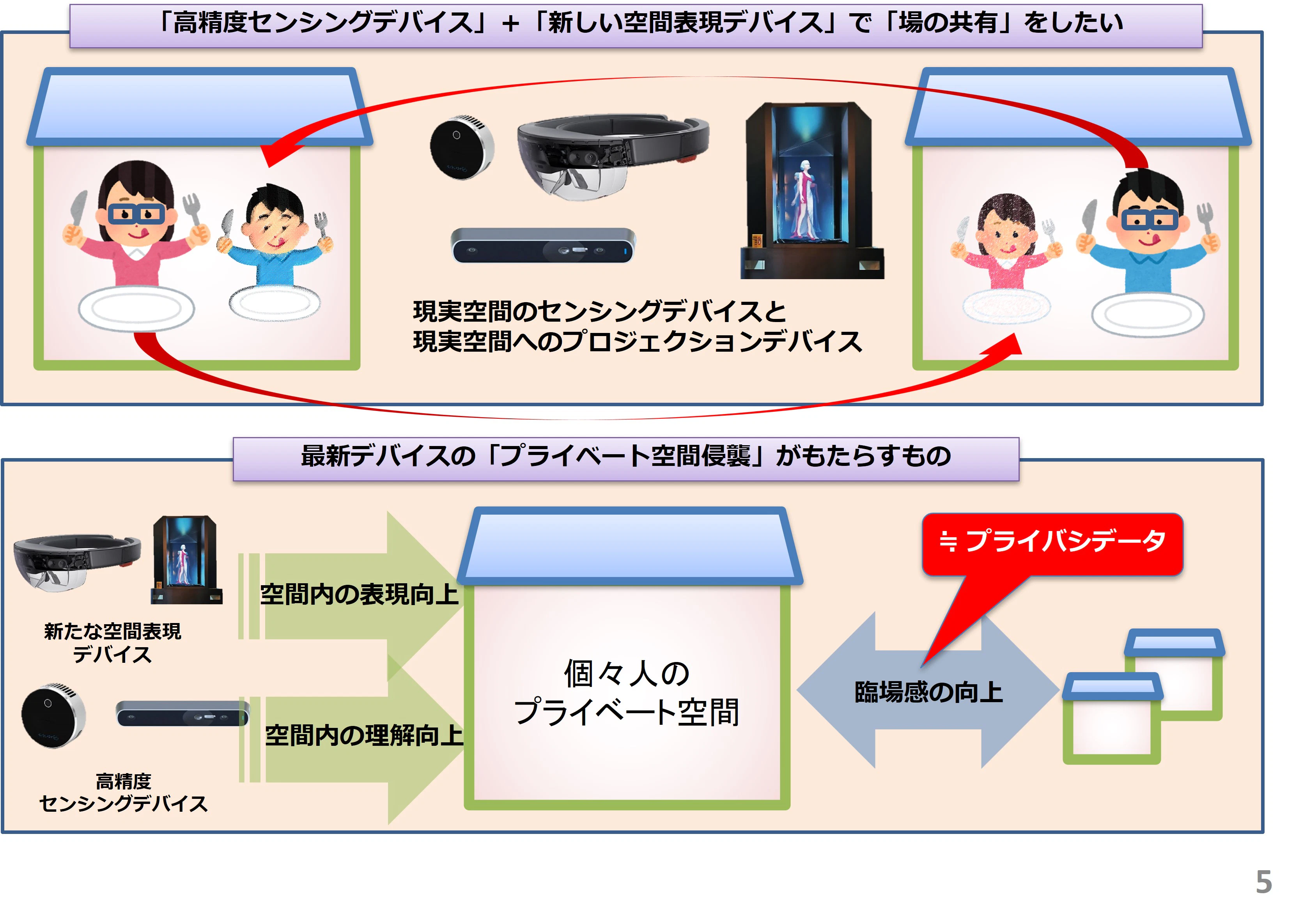
COVID-19の流行以降、遠隔交流のためのツールとしてメタバースに注目が集まっています。近年の3Dセンシング技術の発展により、現実の空間を常時3Dスキャンし、仮想空間で共有するという新たな遠隔交流システムが可能になりつつあります。我々は、このシステムを「ハイブリッドメタバース」と名付け、その実用化を目指す研究を行っています。
ハイブリッドメタバース実用化における最重要課題は、3D映像の通信量削減と映像品質維持の両立です。この実現のためには、データ容量を一定以下に抑える制約の下、映像品質を最適化する最適化問題を解く必要があります。最適化問題を定式化するためには、映像品質のモデリングが必要になりますが、映像品質は人間の主観であり単純な数式でのモデリングは難しく、ニューラルネットワークによるモデリングを行います。
ニューラルネットワークを活用した最適化により、複数のユーザが限られたネットワークリソースの下で3D映像品質を最適化するアルゴリズムを設計し、実装と性能評価を行っています。今後は、最適化手法を組み込んだハイブリッドメタバース全体の実装に取り組む予定です。
発表論文