Time-Series Physiological Data Balancing for Regression

機械学習における不均衡データのためのデータバランシング手法

Time-Series Physiological Data Balancing for Regression

Machine learningImbalanced DatasetData balancingTime-series data


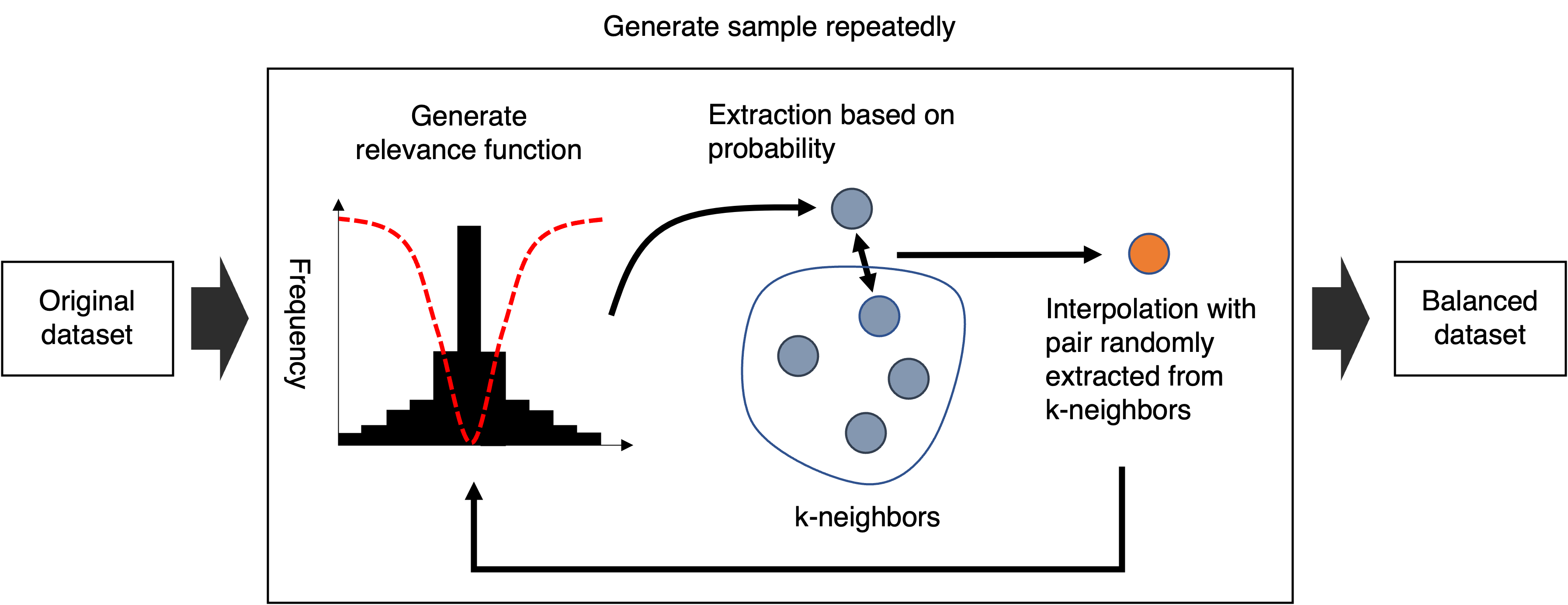
Many studies have shown the effectiveness of ma- chine learning in estimating psychological or physiological states using physiological data as input. However, it is ethically and physically difficult to collect a large amount of data without bias in an uncontrolled environment. Specifically, the amount of data in rare cases is especially small compared to common data. Therefore, the distribution bias may cause overfitting in machine learning. In this paper, we propose a SMOTE-based method to alleviate the distribution bias by data augmentation in the regression problem using a dataset containing time-series physiological data. The effectiveness of the proposed method was confirmed for datasets of thermal sensation and core body temperature collected in uncontrolled environments. The results show that our method improves the performance of regression models for minor cases with a bit of decline in the mean average error.

  • Hiroki Yoshikawa, Akira Uchiyama, Teruo Higashino, "Time-Series Physiological Data Balancing for Regression," Proc. of the 2021 IEEE International Conference on Artificial Intelligence and Computer Applications (ICAICA 2021), Dalian, China, June 28-30, 2021. doi:https://doi.org/10.1109/ICAICA52286.2021.9498128
A Digital Twin Approach for Crowd Flow Modeling on Railway Station Platforms

Effective crowd tracking at railway station platforms is essential for ensuring passenger safety and optimizing pedestri...

Digital Twin Crowd Simulation Railway Station

Efficient Machine Unlearning for Mobility Logs with Spatio-Temporal and Natural-Language Data

Modern mobility platforms store vast streams of GPS trajectories, temporal metadata, free-form textual notes, and other ...

Machine Unlearning Privacy Mobility
Adaptive Message Scheduling Assisted by Natural Language Processing Models

Adaptive Message Scheduling Assisted by Natural Language Processing Models

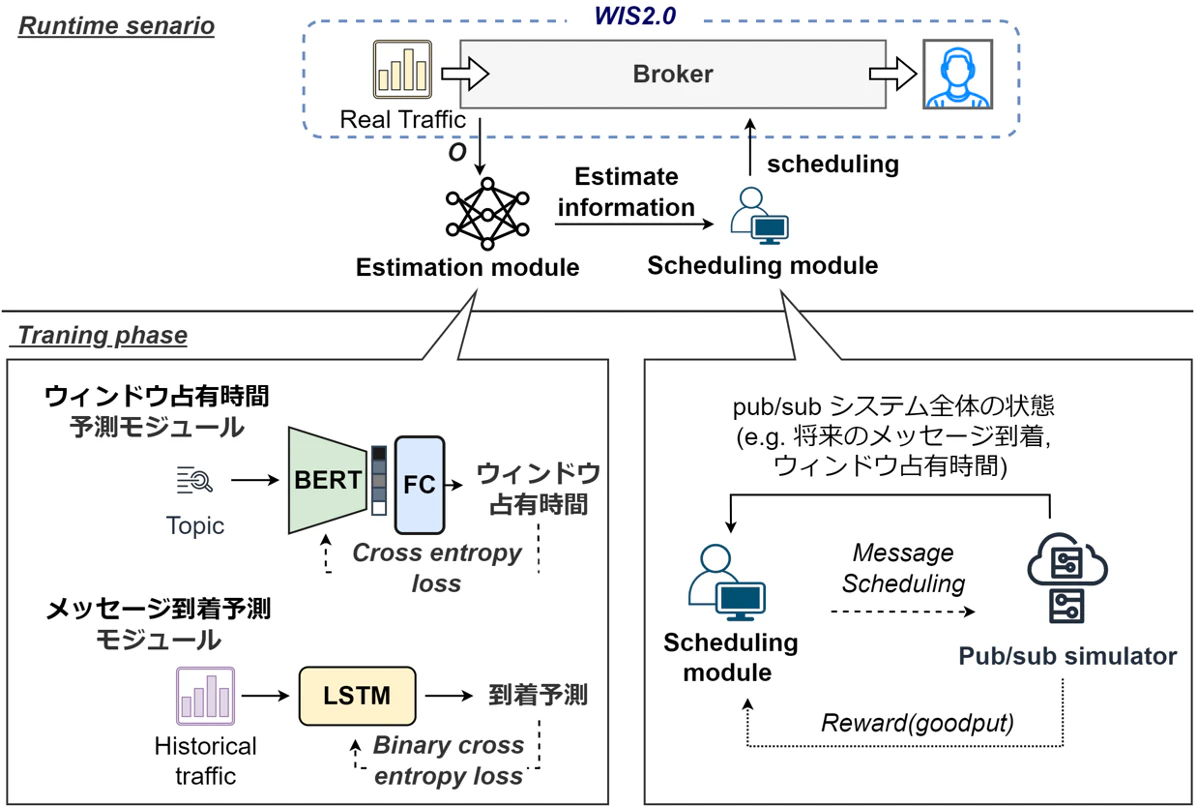
This study proposes an adaptive message delivery mechanism for a broker in the WMO Information System 2.0 (WIS2.0), a ne...

WIS2.0 Pub/Sub Reinforcement Learning
Indoor Object Recognition with WiFi RSSI-Integrated Visual-Language Models

Indoor Object Recognition with WiFi RSSI-Integrated Visual-Language Models

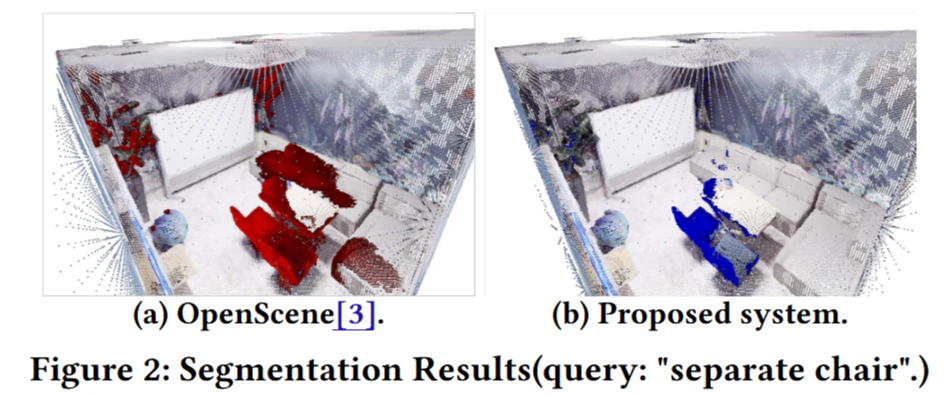
This study proposes a novel method for automatic object recognition and classification in indoor environments using visu...

Point Cloud Visual Language Model AIoT +3
Victim Detection Based on Shape Features from 3D Point Clouds

Victim Detection Based on Shape Features from 3D Point Clouds

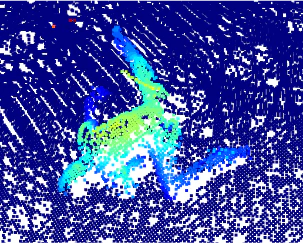
Japan experiences frequent natural disasters, including large-scale earthquakes. As seen in the case of the Great Hanshi...

Drone LiDAR Victim Detection
Map-Aware Super-Resolution GPS Trajectory Reconstruction via Machine Learning

Map-Aware Super-Resolution GPS Trajectory Reconstruction via Machine Learning

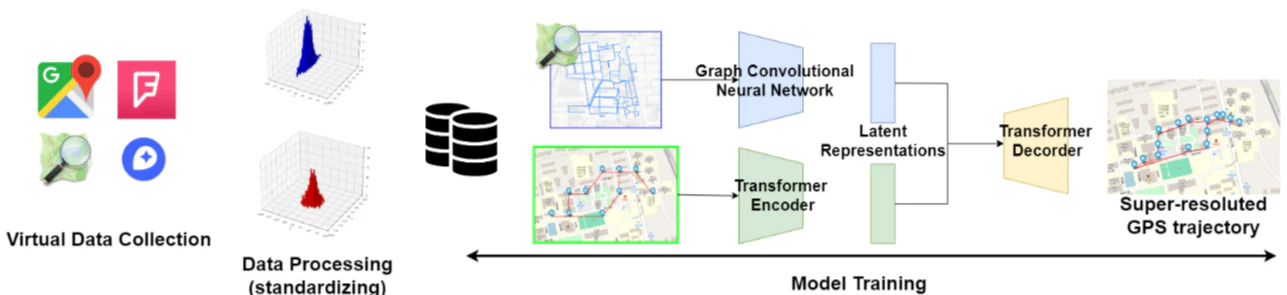
This research aims to realize a novel system for reconstructing high-resolution GPS trajectory data from truncated or lo...

Mobility Data Reconstruction Spatial-Temporal Data Processing Transformer Models +2