Point Cloud-based Fall Detection for Healthcare Applications

三次元点群に基づく転倒検知

Point Cloud-based Fall Detection for Healthcare Applications

Keywords

Fall DetectionPrivacy PreservationLiDAR

Falls pose a significant health risk for older adults, with the WHO reporting them as the second leading cause of accidental deaths worldwide.
In Japan, where the aging population is rapidly increasing, falls have become the primary cause of fatal household accidents.
Since falls can lead to fractures, head injuries, and a decline in quality of life requiring long-term care, prompt detection and response are essential.
Existing fall detection systems utilize accelerometers and cameras, but they pose challenges such as inconvenience in wearing devices and privacy concerns for older adults.
While radio-based fall detection using wireless signals has gained attention as a privacy-conscious alternative, improving its accuracy remains a challenge.
To address these issues, this study develops a low-cost, non-invasive fall detection system using LiDAR, ensuring both privacy and high accuracy.
Our system, based on Hitonavi-µ, analyzes 3D point cloud data to detect falls and assess their risk level in four stages: "no fall, low, moderate, and high."
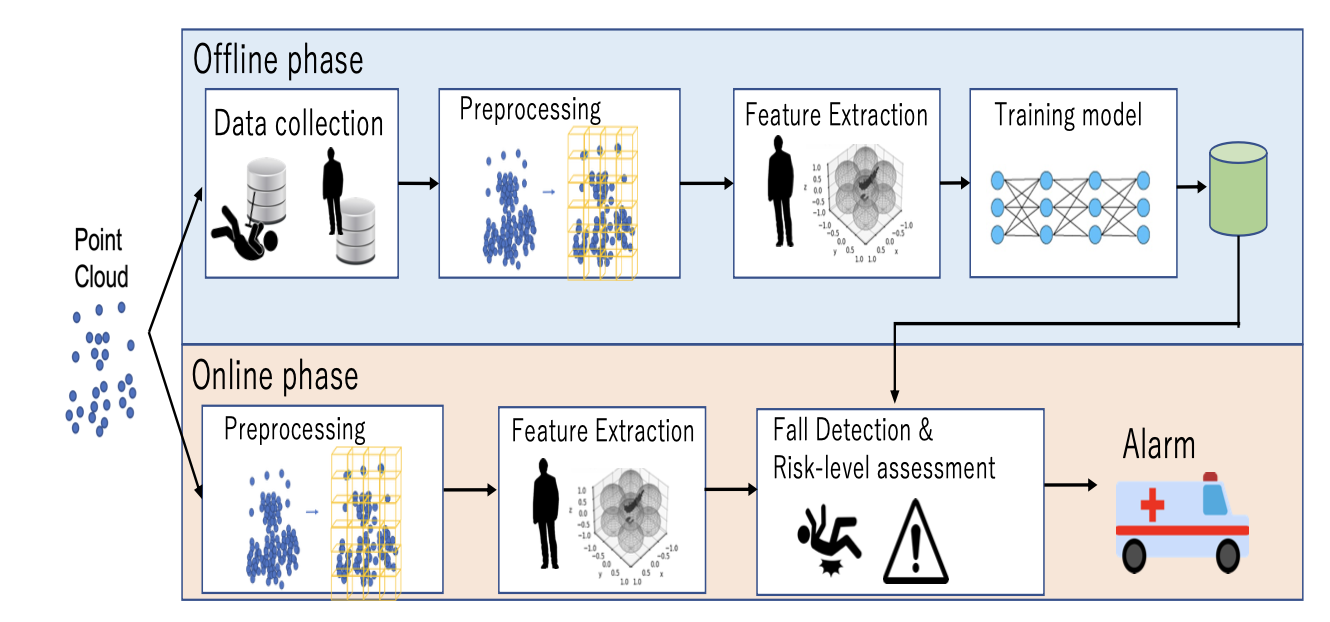

Published Papers

  • 山田翔太, 天野辰哉, & 山口弘純. (2023). Point Cloud-based Fall Detection for Healthcare Applications. 第 31 回マルチメディア通信と分散処理ワークショップ論文集, 98-105.
  • Yamada, S., Rizk, H., Amano, T., & Yamaguchi, H. (2023, November). Fall detection and assessment using multitask learning and micro-sized lidar in elderly care. In International Conference on Mobile and Ubiquitous Systems: Computing, Networking, and Services (pp. 280-293). Cham: Springer Nature Switzerland.
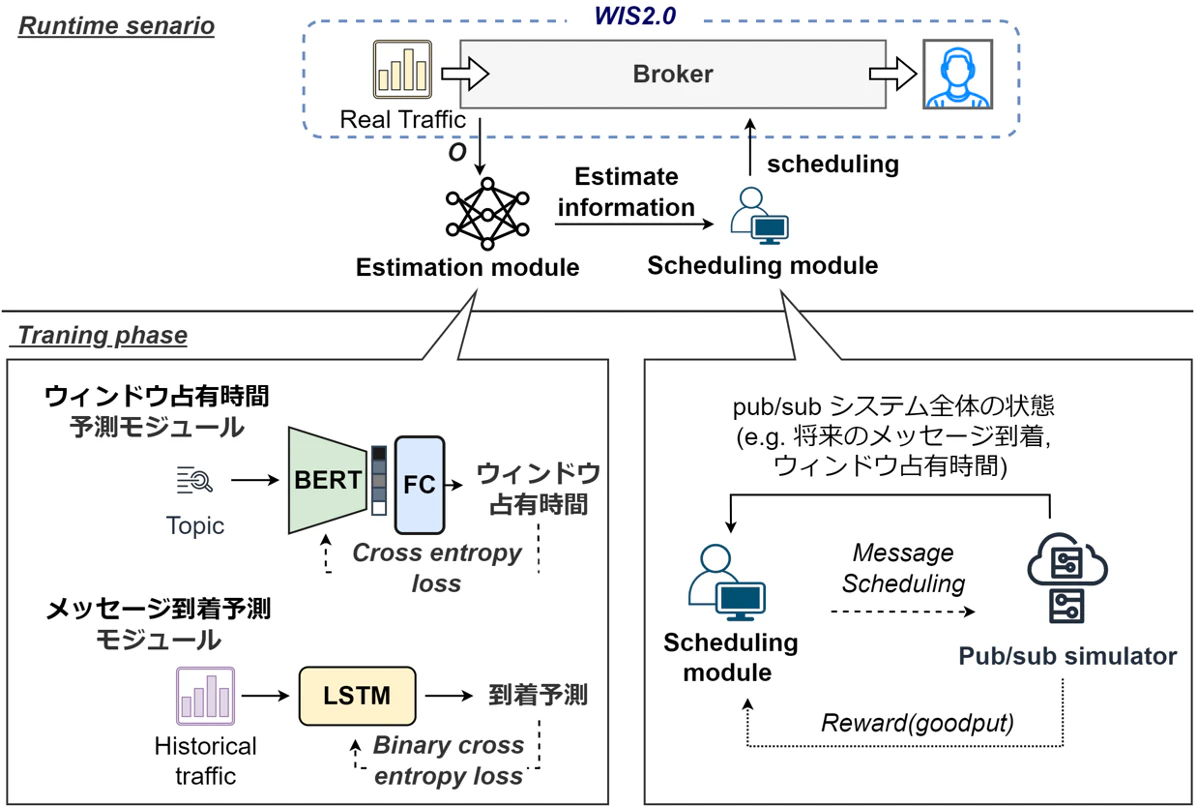
Environment-Aware Distributed Scheduling for Emergency LoRa Networks

Yuto Inaba, Tatsuya Amano, Akihito Hiromori, Hirozumi Yamaguchi

2026 IEEE International Conference on Pervasive Computing and Communications Workshops and other Affiliated Events (PerCom Workshops), SPT-IoT 2026, pp. 1366–1371

Disaster CommunicationLoRa +4

A Lightweight Vision-Language Model for Disaster Image Summarization

Hibiki Yoshizaki, Akira Uchiyama, Akihito Hiromori, Mineo Takai, Hirozumi Yamaguchi

2026 IEEE International Conference on Pervasive Computing and Communications Workshops and other Affiliated Events (PerCom Workshops), PerconAI 2026, pp. 1203–1208

Semantic CommunicationDisaster Response +4

Physics-Integrated Deep Learning for Urban Landslide Prediction

Ren Ozeki, Hamada Rizk, Hirozumi Yamaguchi

2026 IEEE International Conference on Pervasive Computing and Communications Workshops and other Affiliated Events (PerCom Workshops), URBSENSE 2026, pp. 1094–1099

Landslide PredictionPhysics-Integrated Learning +3

Ray-Tracing-Driven Pattern-Based Vehicle Recognition in ISAC Radar

Heetae Jin, Akira Uchiyama

2026 IEEE International Conference on Pervasive Computing and Communications Workshops and other Affiliated Events (PerCom Workshops), PerRad 2026, pp. 328–333

ISACBeyond 5G +4

A Simulation Framework for Precision Formation Flying of Massive Satellite Swarms

Tatsuya Amano, Akihito Hiromori, Hirozumi Yamaguchi, Sumio Morioka

2026 IEEE International Conference on Pervasive Computing and Communications Workshops and other Affiliated Events (PerCom Workshops), PerVehicle , pp. 230–235

Satellite Formation FlyingDistributed Simulation +4

A Digital Twin Approach for Crowd Flow Modeling on Railway Station Platforms

Yu Yasuda, Tatsuya Amano and Hirozumi Yamaguchi

IEEE International Conference on Smart Computing (SMARTCOMP), pp. 82-89

DOI 10.1109/SMARTCOMP65954.2025.00069

Digital TwinCrowd Simulation +1